
Games for Teaching
Games for Teaching
JapanLab
Educational English-language games about topics in Japanese history, literature, and culture.
History Games Initiative
Educational English-language games about topics in history throughout the world.
JOSHU
Educational games for learning Japanese language skills.
JapanLab Digital Exhibits
Non-game resources for learning about Japanese history, literature, and culture.
Want to learn about Japan’s tumultuous encounter with foreign powers in the 19th century? What about violence in Medieval Japan, or what it might have been like to be one of the famous 47 ronin? Do you need tools for remembering kanji and hiragana? We’ve got all that and more. All the games and resources on this page have been designed by teams of undergraduate students working closely with a faculty advisor to adapt cutting-edge research for classroom use.
These games are intended as an educational resource to critically assess important and sometimes difficult historical, cultural, and literary topics.
JapanLab
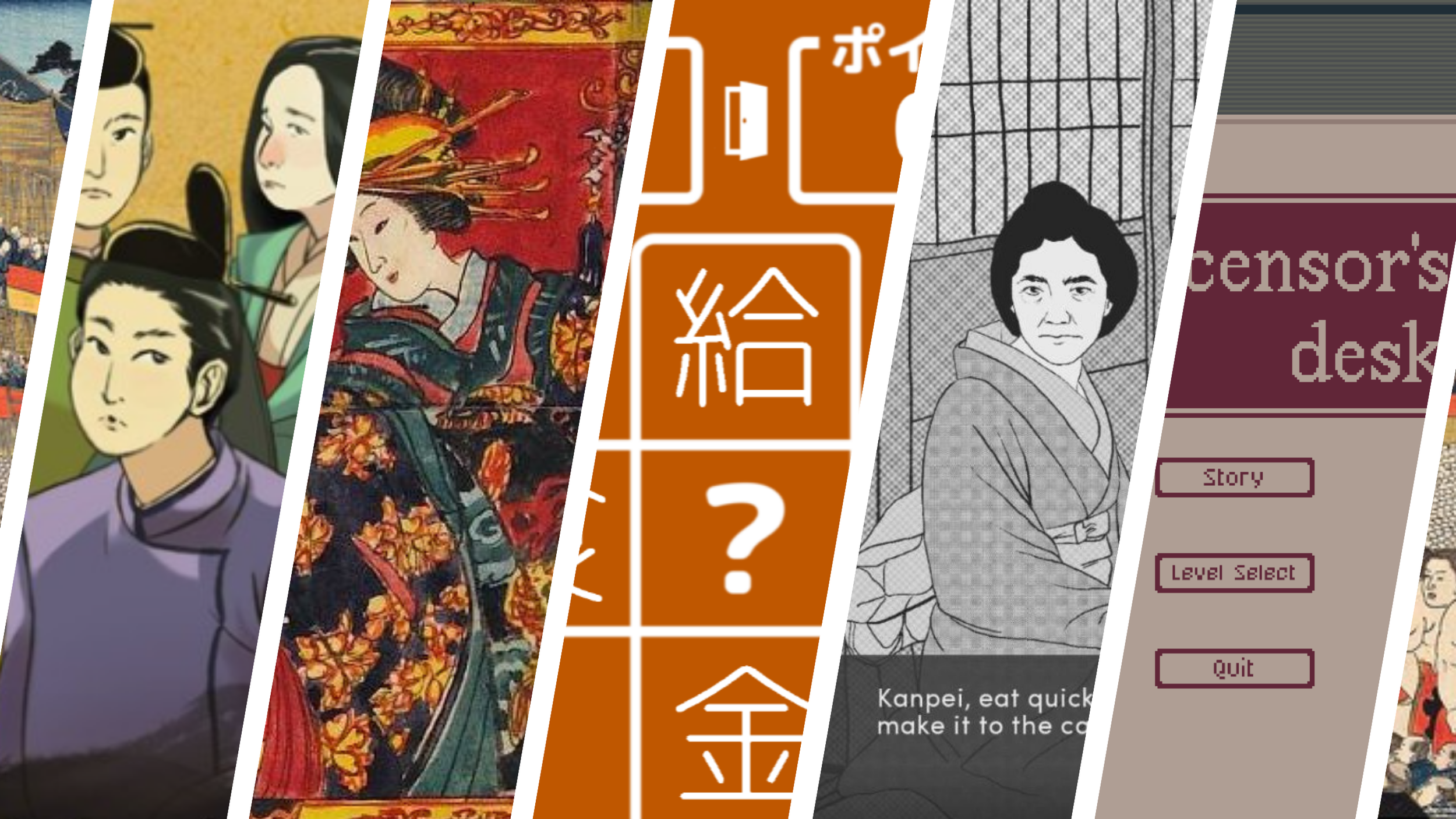
In Palace of Poetry, a first-person narrative experience, players engage with the women of Genji’s world, immersing themselves in the culture, history, gender dynamics, and daily life of Heian-era Japan. The game seeks to bring this literary classic to a modern audience, making its timeless themes and intricate social world more accessible and engaging.

It is the summer of 1853. A small fleet of ships commanded by Matthew C. Perry have stormed into Edo Bay, engaging in no violence but causing immense panic. Over two hundred years had passed with Japanese borders closed to outsiders—and suddenly, these foreigners were at the country’s shores demanding open trade. You play as Tsumaki Naoharu: an ambitious, curious young samurai working under Abe Masahiro, the chief senior councillor of Tokugawa Japan.

The popular image of the samurai centers on combat and the mythical code of bushido. This short game explores the grinding economic reality of a low-ranking samurai in Tokugawa period (1600-1868) Japan. For its source material, it draws from a pathbreaking article by historian Constantine N. Vaporis ("Samurai & Merchant in Mid-Tokugawa Japan.")
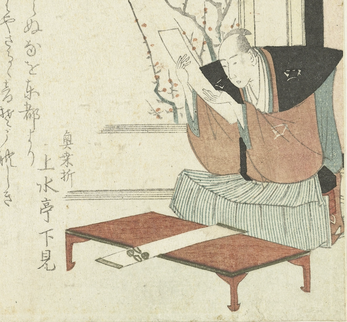
Imagine you're a young samurai in Japan in 1701. You have to make an excruciating choice between family and honor – either go into impoverished exile with your mother and sister who will need your help to survive, or join your fellow masterless samurai in a quixotic quest to avenge the death of your dishonored lord. Which do you choose? Ako: A Test of Loyalty takes you into the story of the 47 ronin, one of the most famous episodes in Japanese history.

Ready, Set, Yokohama allows players to race from Tokyo to Yokohama like it’s the year 1872. In this digitization of Utagawa Toyokuni IV’s “Catalogue of the Trip to Yokohama in Sugoroku”, up to four players try their luck sprinting to Yokohama via steam train, rickshaws, or even the telegraph. Find out what there was to see in treaty port Yokohama and learn about travel, technology, and cultural exchange in Japan during the late-19th century.

To censor or not to censor, that is the question — and the game. Imagine you are a government censor working in imperial Japan or an official in the CCD (Civil Censorship Detachment) working under General Douglas MacArthur in the late 1940s during the Allied Occupation of Japan. Or a “self-regulator" in the post-Occupation era when censorship has ostensibly been abolished. When faced with morally or politically sensitive materials that come across your desk, what do you do? The Censor’s Desk places the player in the shoes of a new bureaucrat who must decide whether to ban, approve, or redact the texts that come across their desk based on rapidly shifting political and practical considerations as well as a set of constantly changing rules that were never clear-cut from the start.

History Games Initiative
Coming soon!
JOSHU
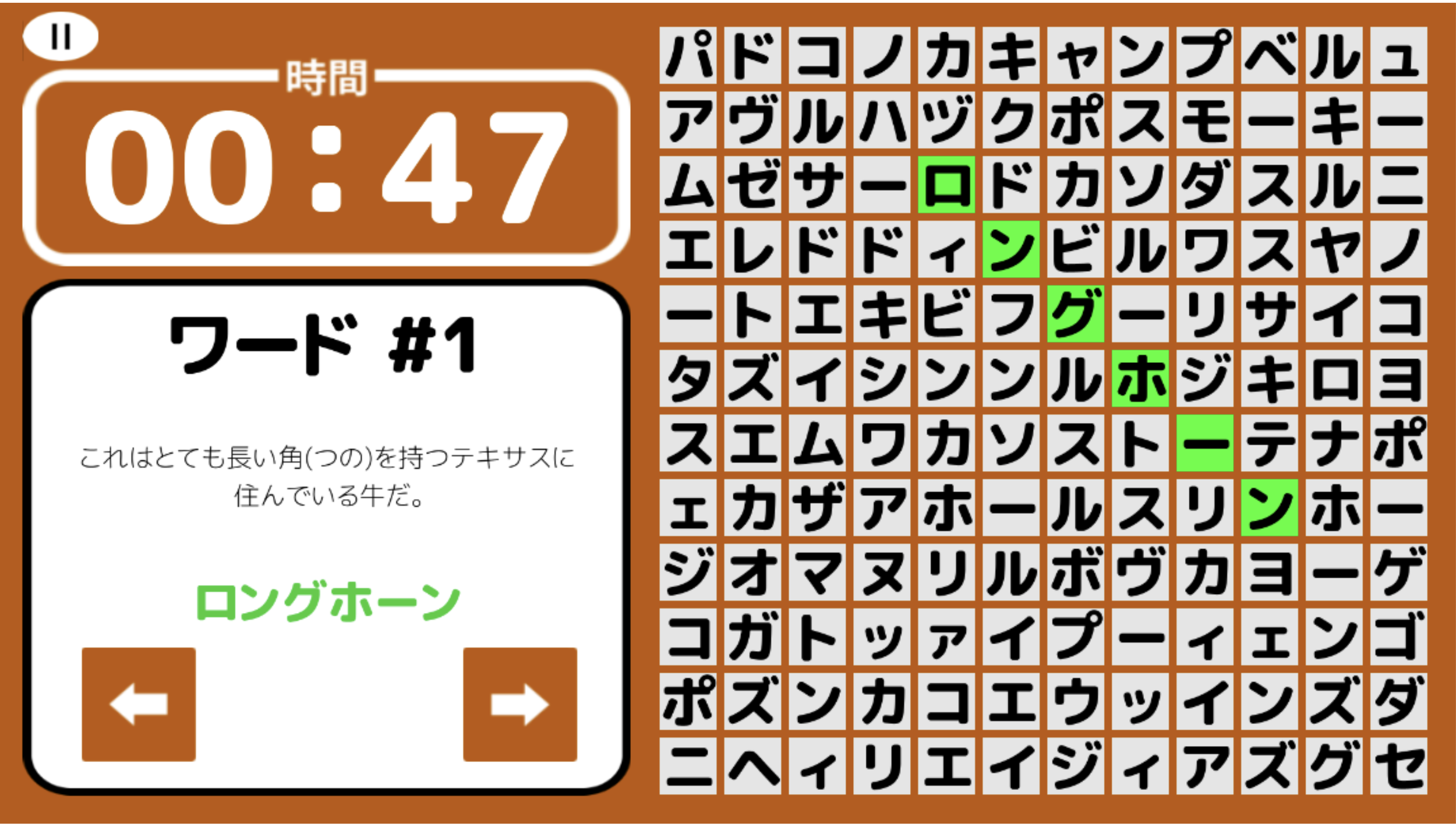
Japanese Online Self-Help Utility (JOSHU) is a set of innovative language tools developed by Dr Naoko Suito, who taught Japanese courses at the University of Texas at Austin for many years. JOSHU includes a range of tools for Japanese language instructors and for anyone interested in learning Japanese. In Japanese, JOSHU literally means "assistant", or "tutor", which is what this website attempts to do for anyone interested in learning the Japanese language.
JapanLab Digital Exhibits
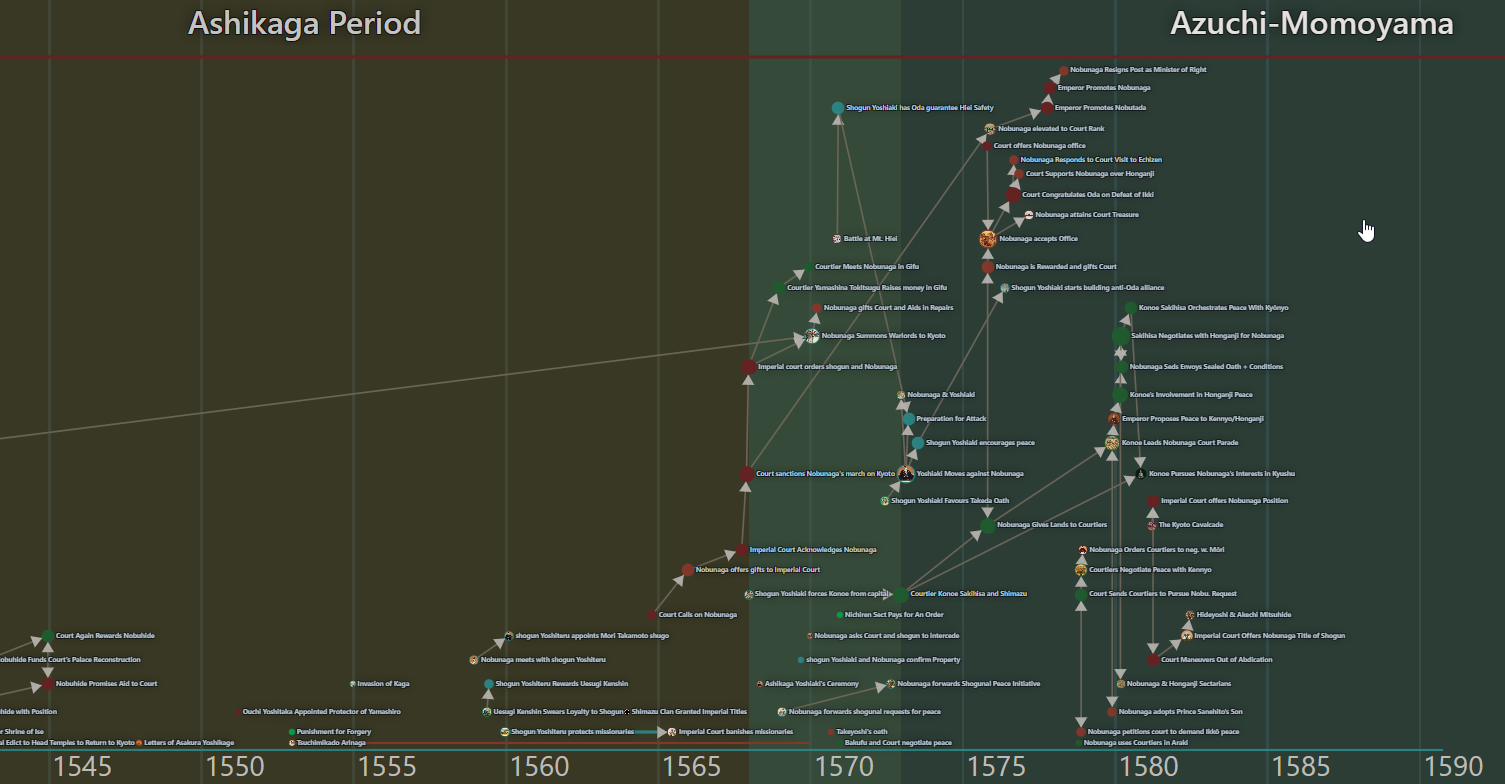
This digital exhibit helps students learn how to make sense of a world at war. A variety of digital tools provide students with unique access to the causes, origins, and connections that sustained institutional power during the Sengoku period (1477-1573).
Welcome to Sumoroku–the sumo-themed sugoroku! While playing sugoroku may be a breeze, life as a rikishi fighting his way to the top is anything but. In this game, you will follow our rikishi’s arduous journey from humble beginnings to the very pinnacle of professional sumo. You will be given a glimpse into the life and tradition surrounding sumo through various minigames, diary entries, and informational excerpts. It’s time to don your mawashi and show us all what you’re made of.

Playing at Empire — NEW GAME!
"The Great Victory of the Imperial Army in the China Incident sugoroku" was a supplement to the January 1939 issue of the Japanese magazine The Housewife's Friend. This digitized version places the player in the shoes of a group of family or friends playing over the New Year's Holiday two years into the second Sino-Japanese War. Experience firsthand a game of propaganda that was designed to convince players that the “China Incident” was not a Japanese invasion of China but a heroic struggle, supported by the Chinese people themselves.
Playing this game thus requires you to think historically. Can you appreciate the appeal of the game, even knowing that the Japanese army caused massive Chinese civilian casualties? Can you imagine appreciating a sanitized, optimistic account of the war because your son or brother or father is on the frontline? Imagine that you are well-informed Japanese official and so you know that Japanese troops are terrorizing Chinese civilians. What do you tell your family about the game? Do you “ruin” their New Years fun? Is it better for them not to know?

JapanLab Highlights and Free Tutorials for Aspiring Developers: @utjapanlab on YouTube


Our games are playable in browser or by download on itch.io at https://japanlab.itch.io/